Both Supply’d ERP and Deacom provide substantial functionality across batch production, inventory, quality, traceability, planning and warehousing. Deacom brings a broad process-manufacturing ERP with native financials and deep formulation controls, while Supply’d focuses exclusively on food and extends the operating workflow across retail, wholesale and eCommerce sales, intelligent automation, employee training, delivery and supplier collaboration.
The platforms overlap extensively across manufacturing, inventory, quality, traceability and planning. The differences become clearer across food-specific operational workflows, connected sales channels, employee training, delivery automation and supplier and customer collaboration.
| Features | Supply’d ERP Food-native ERP for connected food operations | Deacom All-in-one batch & process manufacturing ERP | |
|---|---|---|---|
| Industry focus | Purpose-built for food | Food, chemical, pharma & process manufacturing | |
| Platform scope | Complete food ERP | All-in-one batch & process manufacturing ERP | |
| Typical implementation | 4–12 weeks | 4-8 months | |
| Implementation provider | Direct with Supply'd | Direct with ECI | |
| User experience | Modern, intuitive interface designed around food operations | Process-manufacturing ERP interface | |
| Cloud platform |  |
 |
|
| Food product & recipe management | |
|
|
| Ingredients, allergens & nutrition | |
|
|
| Food labels & specifications | |
|
|
| Sales order management | |
|
|
| Standing & recurring orders | |
— | |
| Sales channel integrations | |
eCommerce & EDI supported; other channels via integrations | |
| Customer ordering portal | |
|
|
| AI customer order capture | |
— | |
| Purchasing & procurement | |
|
|
| Demand forecasting | |
|
|
| Intelligent purchasing | |
|
|
| Inventory management | |
|
|
| Batch & expiry traceability | |
|
|
| Production management | |
|
|
| Guided weigh-up & connected scales | |
Scale integration for variable & catch weight | |
| Demand-driven production planning | |
|
|
| Warehouse management | |
|
|
| Mobile & scanner workflows | |
|
|
| Food safety & quality checks | |
|
|
| Employee training management | |
— | |
| Product recall management | |
|
|
| Fleet route optimisation | |
Route planning included | |
| Digital proof of delivery | |
|
|
| Cold-chain delivery checks | |
— | |
| Supplier invoice scanning & reconciliation | |
|
|
| Business intelligence & reporting | |
|
|
| Supplier collaboration | |
EDI trading partner connectivity | |
| Financial accounting | Xero & MYOB integrations; native accounting coming soon | |
Supply’d ERP is designed around how food operations actually work. Clear colour coding, visual signals and guided workflows help teams know what needs attention and reduce the chance of mistakes. Everyday tasks stay simple for production, warehouse and operational teams, while managers, owners and executives still have access to the deeper controls, reporting and insights they need.
Both platforms provide substantial operational depth for food manufacturers. Deacom is a broader process-manufacturing ERP with native financials and deep controls around formulation, quality and manufacturing. Supply’d is focused exclusively on food and connects more of the wider sales, operational, delivery and trading journey in one food-native platform.
Supply’d ERP connects every step, so sales demand informs purchasing, inventory informs production, picking updates orders and every result improves the next decision.


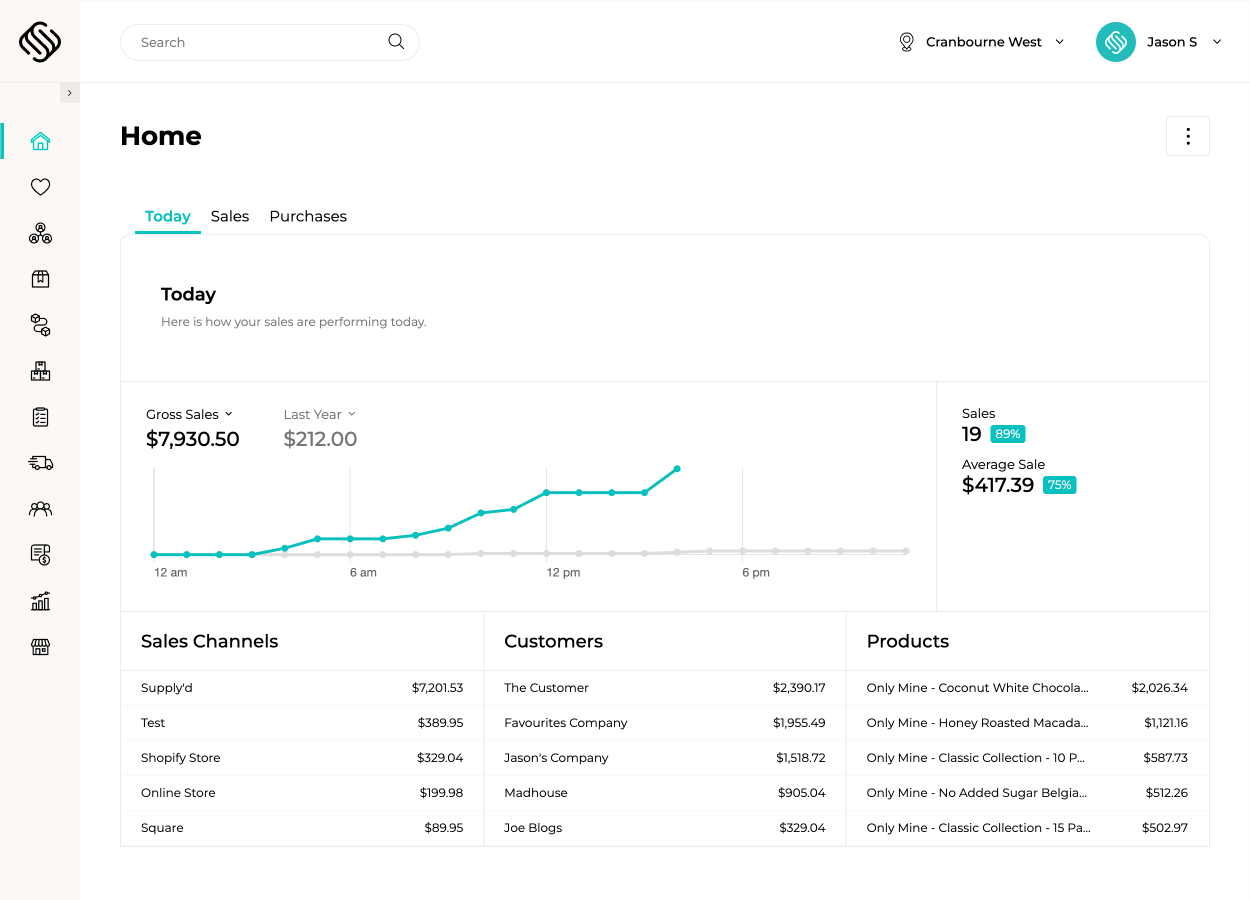
Most systems manage individual parts of the operation. Supply’d connects the entire journey, bringing sales, forecasting, purchasing, production, inventory, picking and delivery together in one platform. From the moment an order is received, every team can see what needs to happen next.



Implementation is tailored to the size and complexity of your operation. Choose structured remote onboarding or deeper planning, data support, onsite training and go-live assistance through our Discovery & Implementation Program.
Explore Implementation
Explore how food manufacturers, bakeries, wholesalers and retailers use Supply’d ERP to run their operations.
Book a demo